ATTIC RAIN SOLUTIONS
WHAT IS ATTIC RAIN & POSSIBLE SOLUTIONS
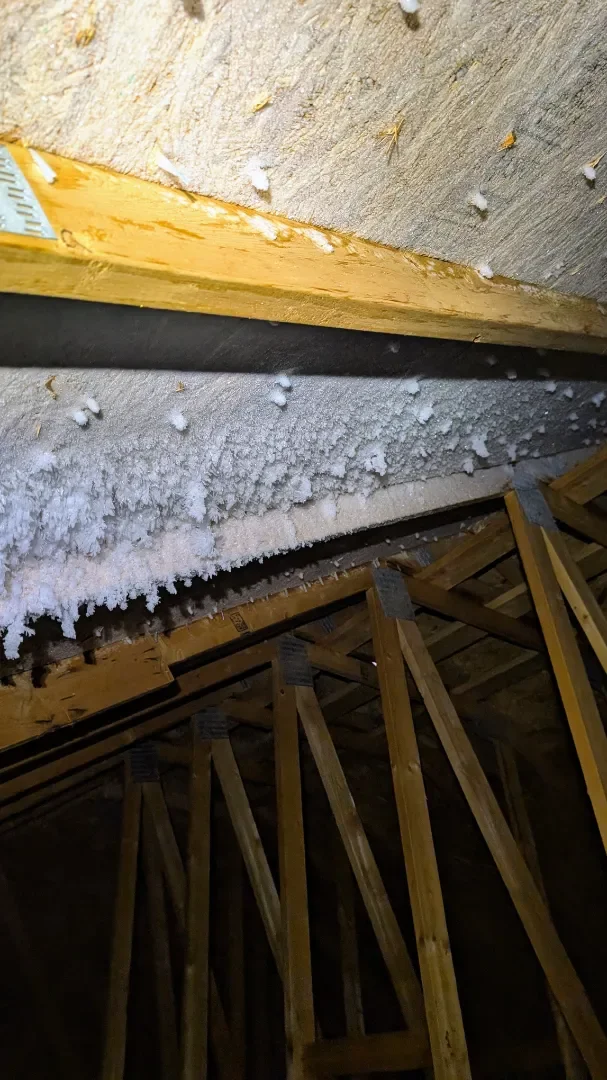
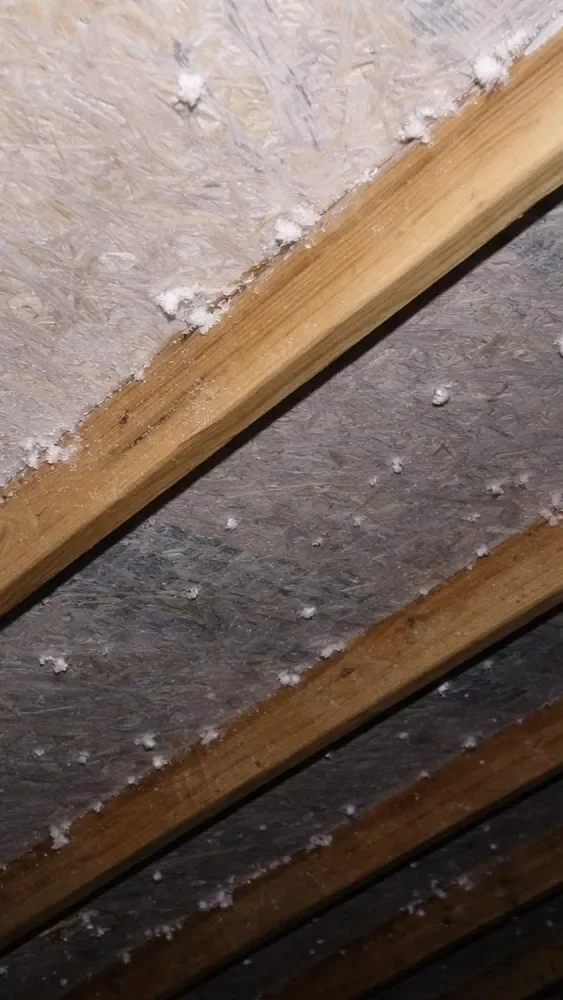
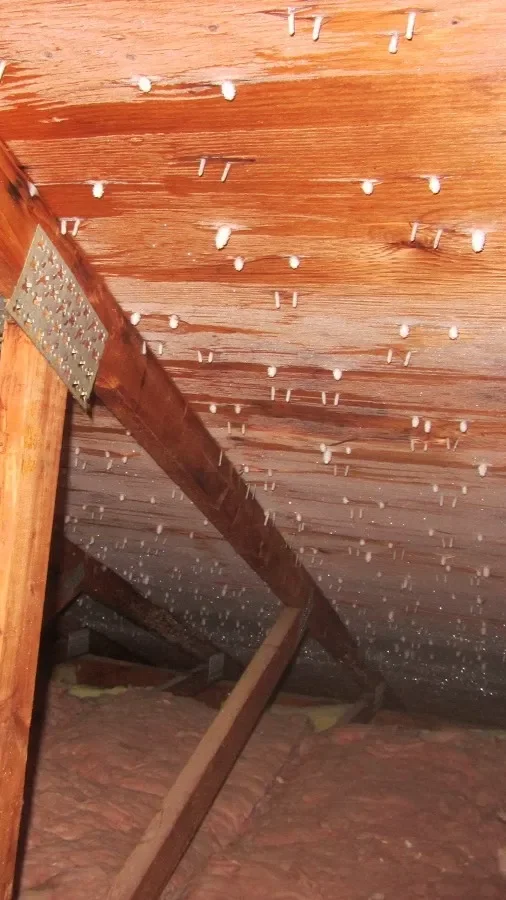
"Attic rain" is a common roofing phenomenon that occurs when warm, moist air from your home leaks into the cold attic space, where it condenses and freezes into a layer of frost on the underside of your roof deck. During a sudden warm spell or "Chinook," this accumulated frost melts rapidly—faster than your ventilation can exhaust it—causing water to drip down onto your insulation and ceiling. Often mistaken for a roof leak, attic rain is actually a byproduct of inadequate insulation, and gaps in your vapor barrier, or insufficient ventilation. It is accelerated in super cold periods because of the “stack effect” that literally sucks air from inside your home into the attic because of the extreme temperature difference.
Option 1: The "Good" Strategy – Insulation Upgrade, Some Air Sealing & Mitigation
The "Good" option focuses on upgrading your existing insulation levels while protecting your home's natural airflow. We install high-quality insulation over your current layers and add air chutes to ensure any soffit venting you may have, remains unobstructed. This approach relies on active moisture mitigation from the homeowner. By managing your home’s humidity during cold snaps—such as turning down humidifiers and consistently using kitchen and bathroom exhaust fans—you can significantly reduce the amount of moisture available to turn into attic rain. You may also want to consider a whole home dehumidifier, to reduce the natural humidity we often experience during cold snaps in Calgary. In addition, depending on your current insulation levels, we offer the option to dig out and spray foam seal major points of penetration through your vapor barrier, this is particularly useful in older homes with less modern vapor barriers. We focus on bathroom fan housings, plumbing stacks, potlights and major ceiling fixtures. When performing this work, we also examine your roof ventilation patterns, and may recommend additional measures that you might discuss with a roofing contractor, to add additional ventilation. This is the least expensive option, and the most frequently used. It offers an balance between addressing an issue that is only an issue for 3-4 weeks per winter, and a good return on your investment in energy savings.
Option 2: The "Better" Strategy – Insulation Replacement & Comprehensive Sealing
For a more proactive approach, our "Better" option involves a complete reset of your attic’s thermal envelope. We remove all old insulation to expose the attic floor, allowing us to perform precision spot air sealing. Using professional-grade canned foam, we seal all major penetrations like pot lights, plumbing stacks, ceiling light boxes, bathroom fan penetrations, wiring bundles, and other large visible vapor barrier penetrations. We also repair visible tears in the vapor barrier. We then blow in new insulation to the highest possible R-value and install air chutes, creating a much tighter seal that should significantly reduce moisture penetration from ever reaching the roof deck. When performing this work, we also examine your roof ventilation patterns, and may recommend additional measures that you might discuss with a roofing contractor, to add additional ventilation. When performing this work, we also examine your roof ventilation patterns, and may recommend additional measures that you might discuss with a roofing contractor, to add additional ventilation.
Option 3: The "Best" Strategy – The Complete Hybrid Solution
The "Best" and most effective way to permanently reduce the likelihood of attic rain is our full-spectrum spray foam solution. After removing the old insulation, we install a continuous 2" layer of R10 spray foam across the entire attic floor. This creates an airtight, seamless gasket that completely isolates the attic from the moisture generated inside your home. Combined with new high-R-value insulation and protected soffit venting, this provides the highest level of protection, energy efficiency, and peace of mind available on the market today.
It is the most costly option, but does add significant re-sale value to your home & offers the best opportunity to mitigate frozen moisture in an attic, particularly those that are prone to frozen moisture due to design (pre 1990’s homes).