The Winter Paradox: Why Running Your Bathroom Fan Longer in Cold Weather Protects Your Attic
The Invisible Enemy - Moisture's Winter Assault
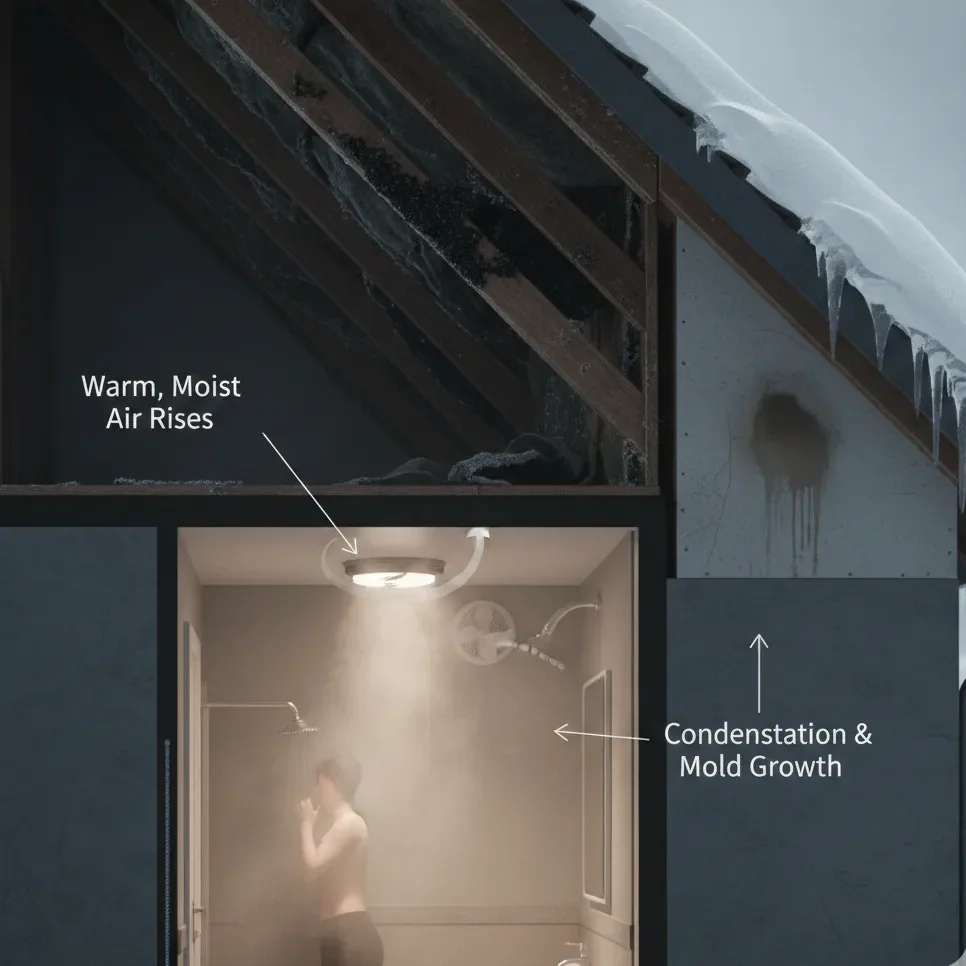
The Problem: Warm, Moist Air Rises
Think about your bathroom after a hot shower. The air is thick with steam, right? That's moisture, and it doesn't just disappear. While some condenses on mirrors and walls, a significant amount of this warm, humid air rises. In a typical home, especially older ones, there are countless tiny pathways for this air to escape upwards: through unsealed gaps around plumbing vents, electrical fixtures, attic hatches, and even microscopic cracks in your ceiling drywall.
During warmer months, this isn't usually a major issue. The temperature difference between your living space and your attic isn't drastic, and any moisture that makes its way up often dissipates without causing harm.
The Winter Wake-Up Call: Condensation is Key
Winter changes everything. When it's frigid outside, your unheated attic space becomes significantly colder than your living areas. As that warm, moisture-laden air from your bathroom, kitchen, or laundry room rises into the cold attic, it hits a dew point. Just like a cold glass of water on a humid day, the moisture in the air condenses.
This condensation doesn't just form a little dew; it can accumulate. It wets wood, insulation, and anything else it comes into contact with. This is the invisible enemy setting up shop in your attic.
Why it's Worse in Winter:
Greater Temperature Differential: The larger the difference between your warm indoor air and the cold attic air, the more readily condensation will occur.
Reduced Ventilation: Many attics rely on passive ventilation (soffit and ridge vents) which can be less effective on still, cold days. Also, homeowners might inadvertently block vents with snow or insulation.
Longer Periods of Enclosure: During winter, homes are often sealed up tighter for longer periods, trapping more moisture inside the living space.
Understanding this fundamental principle of moisture movement and condensation is the first step to protecting your home.
The Silent Damage - What Moisture Does to Your Attic
So, what exactly happens when moisture consistently infiltrates and condenses in your attic over the winter? The consequences can be far-reaching, expensive, and sometimes, even dangerous.
1. Mold and Mildew Growth:
This is often the most immediate and visible problem. Mold thrives in dark, damp environments, and a moist attic provides the perfect breeding ground. You might see black, green, or white fuzzy patches on your roof sheathing, rafters, and even insulation.
Health Impacts: Mold spores can trigger allergies, asthma attacks, and other respiratory issues for sensitive individuals, and those spores can eventually migrate into your living space.
Structural Damage: While surface mold might not immediately compromise structural integrity, extensive mold growth can begin to degrade wood over time.
2. Rotting Wood and Compromised Structure:
Persistent moisture causes wood to rot. Your roof sheathing (the plywood or OSB that your shingles are attached to) and rafters are all susceptible.
Weakened Roof: Rotted sheathing loses its strength, making your roof vulnerable to heavy snow loads or high winds. This can lead to costly roof repairs or even structural failure.
Soffit and Fascia Damage: Moisture can also affect the wood components around the eaves of your roof.
3. Diminished Insulation Effectiveness:
Insulation works by trapping air. When insulation (especially fiberglass or cellulose) gets wet, it compresses and loses its ability to insulate effectively.
Higher Energy Bills: Wet insulation means your attic is less protected from the cold, leading to more heat loss from your living space and consequently, higher heating bills.
Ice Dams: In a cruel twist, diminished insulation can contribute to ice dam formation. If heat escapes into your attic, it can warm the roof deck and melt snow. This meltwater then runs down to the colder eaves, freezes, and creates an ice dam, which can force water under your shingles and into your walls and ceilings.
4. Pest Infestations:
Damp, rotting wood and insulation can attract pests like carpenter ants, termites, and rodents, who appreciate the softened wood and damp environment.
These are not minor issues; they represent significant threats to your home's longevity and your family's health and comfort.
The Simple Solution - Exhaust Fans as Your First Line of Defense
Now that we understand the problem, let's talk about the solution: your exhaust fans.
How Exhaust Fans Work (and Why They're Crucial in Winter):
Bathroom fans, kitchen range hoods, and laundry room exhaust fans are designed to do one primary job: remove moisture and odors directly at the source, expelling them outside before they have a chance to circulate throughout your home and, critically, rise into your attic.
The "Longer Run Time" Strategy:
When it's cold outside, simply running your bathroom fan during a shower isn't enough. That moist air lingers, and as we've discussed, it will find its way up.
Here's the recommendation:
Bathrooms: Run your bathroom fan during your shower/bath and for at least 15-30 minutes afterwards. For truly long, hot showers, or if your bathroom feels particularly steamy, extend this to 45-60 minutes. The goal is to evacuate as much of that humid air as possible.
Kitchens: Use your range hood fan every time you cook, especially when boiling water, simmering stews, or doing anything that generates steam. Run it for a good 10-15 minutes after you finish cooking.
Laundry Rooms: If you have a clothes dryer that isn't properly vented or if your laundry room tends to get humid, consider running an exhaust fan here as well, especially during and after drying cycles.
Why the "Loss of Heat" is Worth It:
Yes, running an exhaust fan does pull some warm air out of your house. However, the amount of heat lost is generally far less costly than the potential damage from moisture accumulation in your attic. Consider it a preventative maintenance expense that's significantly cheaper than mold remediation, roof repair, or attic insulation replacement.
Pro-Tips for Maximizing Fan Effectiveness:
Ensure Proper Venting: Make sure your exhaust fans are actually venting outside, not just into the attic space! This is a common and dangerous mistake. The ductwork should be insulated and sealed to prevent condensation within the duct itself.
Clean Fan Grilles: Dust and lint can accumulate on fan grilles and blades, reducing their efficiency. Clean them regularly.
Check for Air Leaks: While fans are your first line of defense, sealing air leaks around light fixtures, attic hatches, and plumbing penetrations in your ceiling will further reduce the amount of moisture that bypasses your fans and enters the attic.
Consider a Timer: Many electricians can install a simple timer switch for your bathroom fan, allowing you to set it for 15, 30, or 60 minutes and forget about it. This ensures it runs long enough without you having to remember.
By making a conscious effort to run your exhaust fans for extended periods during cold weather, you're actively preventing a cascade of problems, safeguarding your attic, and ultimately, protecting your most valuable asset: your home. It's a small change with a huge payoff.